
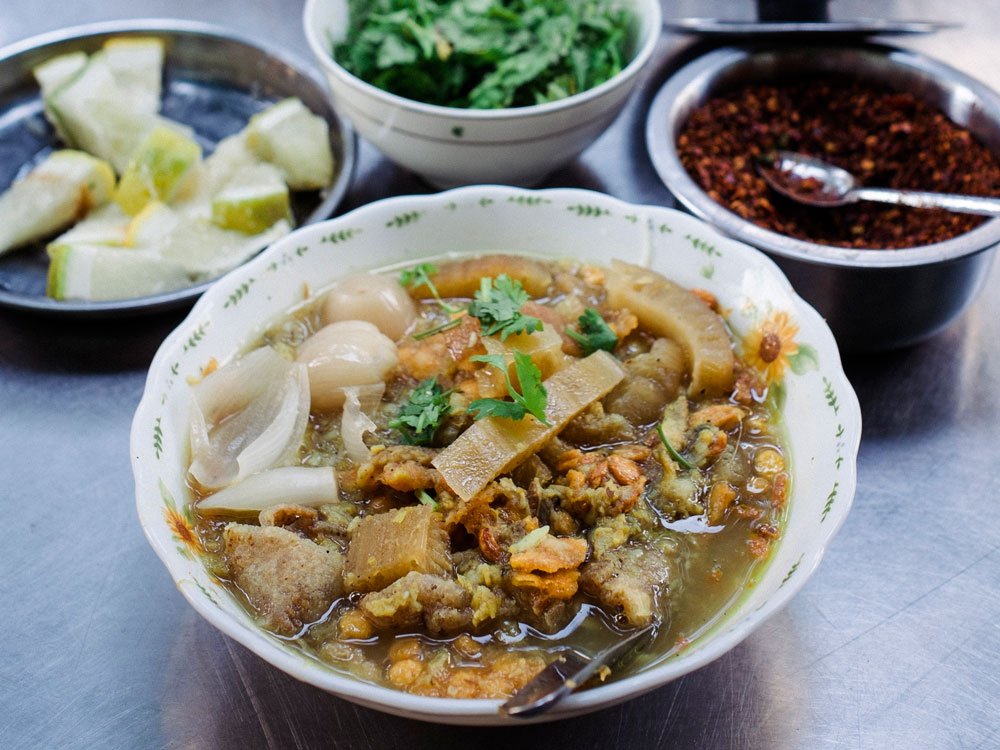

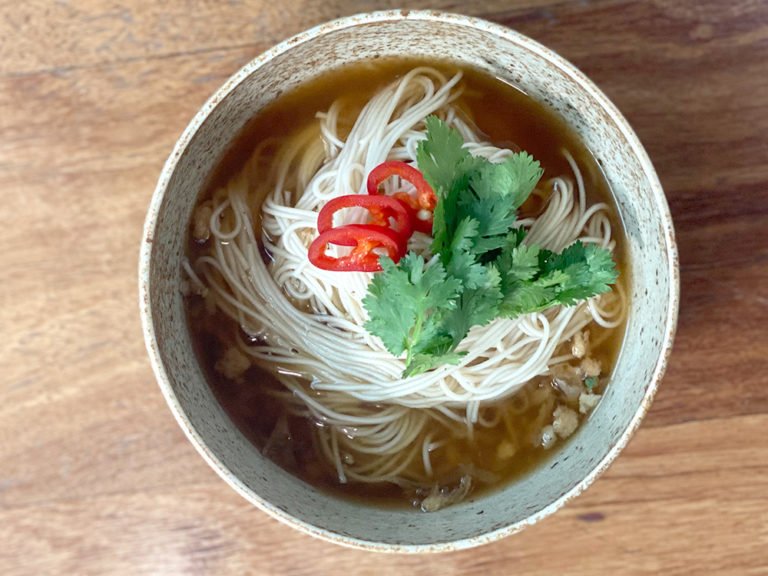
When it comes to comfort food, Mohinga is top of my list. It brings back fond memories of early morning visits to Shwedagon Pagoda which started with breakfast at a mohinga stall nearby. This noodle soup is considered the Burmese national dish and is eaten for breakfast, lunch and dinner. Not surprisingly every family has their own variation and this is my family’s Mohinga recipe. Nowadays I prefer to eat Mohinga nearer lunchtime and invite a group of friends to join in this hearty Burmese brunch.
prepare the fish
300g catfish (or use whole trout)
1 lemon grass stalk, bruised
¼ teaspoon ground turmeric
500ml water
to make the onion paste
1 large onion, chopped
3 cloves garlic
1cm fresh ginger
2 lemon grass stalks, white part only
3 whole dried chillies, soaked in hot water
1 teaspoon shrimp paste
½ teaspoon paprika
½ teaspoon ground turmeric
6 tablespoons peanut oil
to make the mohinga soup
1.5 litres water
100g young banana stem, sliced
(alternatively use 12 small shallots, peeled)
75g ground rice powder, roasted
3 tablespoons fish sauce
1 teaspoon ground black pepper
eat with
500g fine rice noodles or
wheat noodles, cooked
3 limes, halved
5 hard-boiled eggs, peeled & quartered
2 handfuls of fresh coriander, chopped
gourd or onion crispy fritters (page 21)
extra fish sauce & chilli flakes
method
Put the fish in a large pan, add the water, lemon grass and turmeric. Bring to the boil and simmer for 6-10 minutes until the fish is just cooked. Remove the fish from the pan and when cool enough to handle, peel the skin and flake the flesh, discarding any bones. Drain the fish stock through a sieve and reserve for the soup.
Pound the onion, garlic, ginger, dried chillies and lemon grass into a paste in a pestle and mortar, otherwise just chop everything as finely as you can.
Heat the oil in a saucepan and add the onion paste. Cook over moderate heat for 15-20 minutes until the paste is soft and caramelised. Add the shrimp paste, mash with a wooden spoon until incorporated, then mix in the turmeric and paprika. Cook for a further minute until the spices are fragrant before adding the flaked fish. Pop the lid on and cook for 10-15 minutes, allowing all the flavours from the onion paste to infuse into the fish.
The soup paste is done. If you are making this in advance, cool the mixture completely and pop in the freezer. It will keep for up to 1 month.
To make the soup: put the soup paste (completely defrosted if using from frozen), rice powder, water and the reserved fish stock (or 500ml of water if not using fish stock) in a large pan. Bring to a boil while stirring continuously to make sure the rice powder doesn’t clump. Add the shallots or banana stem and simmer for 20-30 minutes until they are tender. Add the fish sauce and taste for seasoning. Finally add lots of black pepper before serving.
To serve, put a handful of noodles in a bowl and ladle over the soup. Let everyone add the garnishes as they wish. It should taste spicy, salty and tangy from the limes.
serves: 4-6
cooking time: 50-70 mins
This recipe is taken from hsa*ba, Burmese cookbook.

Oh, I’m so glad I discovered your blog. I just had Burmese food a few weeks ago and really liked the mohingar. I was hoping to find more information about Burmese cuisine so I could explore.
any idea how to cook “kyar zan hin khar?”
thanks.
Haven’t had kyar zan hin khar for a while. I will try to do a post of this soon.
– Cho
thanks for sharing. I use shwe gyi instead of rice flour and it turned out better and thicker and creamier..
i love this dish..one of my favourites to entertain my non burmese friends
they love it too
does anyone know of a good burmese restaurant in Los Angeles? please advise!
Hi Joe
I had a search on the internet – many restaurants around SF area but none in LA… Does anyone have any information?
– Cho
Wow! Never thought I would find a website with burmese recipes. My favourite is of course mohinga and although I don’t cook I will now! btw have you got a simple recipe for la pe tho?
This is the first someone actually interpreted mohingar recipe properly, keep up the good work.
Any idea on how I can make this without fish, and fish sauce, and how to make akayaw (crispy) part to put in there? I haven’t had mohingar in 12+ yrs… =(
Hi Sandi
I do have a vegetarian version, check out Mohingar for vegetarians and for Crispy batter recipe.
Best wishes,
Cho
Does nayone know of any Burmese people in south africa?
I didn’t know that we can add shrimp paste in mohingar. Good to know.But the smell of the shrimp paste can come out..???
Hi Cho, is there any good substitute for “shrimp paste”?
I love its taste but it is not easily available here in Tokyo.. Thanks for your great recipes! Love your work 🙂
Just like my Burmese gran used to make!
-I like mine with balachung too!
thanks for the recipe,,ill try in my kitchen tomorow,,
we are tired eat indian food all these 5 months,,
am sooo excited I found your blog!! I grew up with Burmese food and have been craving it!!
I would like to suggest about your recipe;
1, mohinga doesn’t need shrimp paste at all; fish sauce is enough
2, need more lemon grass
3, whole black pepper rosted with low heat and make it powder and put it.
4, rosted rice powder is method of delta region and rangoon and upper Burma they used yellow split beans or channa beans .
thanks for your web site! this is wonderful
My mum used to make Mohingar with minced beef for my Dad who didn’t eat fish. Also used stem of silverbeet instead of banana stem,as it wasn’t available at the time.
Dear cho,
I love your receipe.I’m not burmise but I love burmise food.Do you have shan tofu receipe?Can you send it to me please.Thank’s.
this is a really good recipe and i think it needs shrimp paste because it gives a better flavour.
I was first intrigued by this dish when I saw Charmaine Solomon’s book many years ago, and while living in Asia in the 90s would eye the banana trees by the side of the road, always plotting to come back one night… I never got round to it and now live in Melbourne where there are no banana trees: does anyone know where to buy banana stem in Melbourne?
excited to find your recipe page especially your recipe for mohingar. As a child visited Burma often to visit grandparents with fond memories of eating mohingar, always messy! Now looking for a recipe for Khow suey. Can you help?
Hi Suresh
Do you mean the coconut noodle soup when you say khow suey? Khow suey means noodles in Burmese – there are several recipes that comes to mind.
– Cho
have your brill book
found banana stem in Whitechapel market
how long for and how can you keep it?
how is it added to the soup?? diced etc??
great…thanks
Hi Rob
Great to hear you’ve found banana stem.
You need to remove the outer layer of the stem which can be quite fibrous and slice into 1cm thickness. Add to the soup immediately and simmer for 30mins or so until they are tender.
– Cho
Hi,
I live in the UK – I can only find one Burmese restaurant IN THE WHOLE COUNTRY!!!!! Does anyone know of any other than Mandalay in London?
Cheers
good and nice foods must try
Hi:
I’ve been looking for a good Burmese recipe for my youtube show, Pan Asian, so I’m definitely going to try this and I’ll let you know how it goes. Your cookbook looks amazing, by the way, and I love your whole site and the videos as well.
I have a spicy food blog called Rice & Curry, which I invite you to check out at: http://www.riceandcurry.wordpress.com.
I have also self-published a cookbook of Sri Lankan food called Rice&Curry: Sri Lankan Home Cooking.
Best,
Skiz
SO nice to find Burmese recipes that are authentic, looking forward to trying this one, i believe you can also make this with chicken? do you know the recipes also do you know the recipe for fermented tea salad?? i stayed with a Burmese couple in melb, i still dream of their tasty Burmese food!
Hm, this recipe is good. It could be prepared in bulk and frozen for future. I will pass this on to my friends who enjoy a good Asian soup.
I was delighted to discover this book, my children hood memories of Burma has revisited me.
To Andrew and anyone else.
Did u manage to get banana stem in melbourne? I have made mohingar according to this recipe but banana stem is missing. I really like chewing on it whenever i had mohingar.
Please help.
The initial ingredients must be cooked till the yellow hue turns to a darker yellow but do not burn adding water if needed .Also use channa flour to thicken .Found shredded dried banana heart here in vancouver which had to be soaked for sometime before adding .
where can you buy lepet in america!?
Hi Myint
There are couple of Burmese suppliers I found while researching which are listed in the faqs. If anyone can add to this list, please let me know.
– Cho
Thank you so much for this recipe! We tried this in Yangon back in 2009 and it was a flavour explosion. Too much time has passed to relate but your family recipe is delicious and very easy to make(if using shallots)! We will have continued memories of our favourite travel destination!